


I knew something was wrong before I had the language for it.
Not wrong with me. Wrong with how I was being treated. I was twelve years old when I started to understand that kindness was the thing that mattered most, and that I wasn’t receiving it. Not at home. Not at school. And that gap between what I needed and what I was getting told me something I wouldn’t fully understand for another three decades: the awareness itself was proof that I already knew what love felt like. Even when no one around me was offering it.
I think we all know. I think every single one of us is born with that knowledge. We know what feels good for us. We know what’s good for us. We know what hurts. That knowing is not learned. It’s original equipment. And it is, in its quietest and most fundamental form, self-love.
But the world is very good at teaching us to stop listening.
Abuse does this. Trauma does this. Being told you are not enough, that you don’t deserve kindness, that the pain you feel is your own fault. These messages don’t destroy self-love. They bury it. They teach you to override the signal, to distrust the flinch, to treat your own needs as inconvenient or imaginary. And over time, the burial feels permanent. You forget that the love was ever there at all.
I forgot.
I’ve written before about how a little dog named Frisky showed me what unconditional worth looked like before I had the language for it. But even with that early crack in the armor, the burial held for a long time.
I developed an eating disorder as a teenager. I picked up habits I knew were destructive. I put myself in situations I knew were dangerous. And every single time, something in me resisted. It felt like swimming upstream. Not dramatic, not cinematic. Just a low, constant friction. A quiet wrongness that I couldn’t name but couldn’t shake. The bad habits didn’t feel natural. The self-destruction didn’t feel natural. The intrusive thoughts, the doubt, the relentless internal criticism. None of it felt like it belonged to me. And I think that friction was the love. Still there. Still signaling. Buried under years of damage, but never actually gone.
It took therapy to understand that. Not therapy in the abstract, but a specific kind: relational therapy, with a therapist who specialized in attachment, trauma, and complicated grief. And the most important thing she did was allow transference to happen. She let me experience the developmental stages I had skipped, the ones that abuse had stolen from me. And what I discovered through that process was that rebuilding my attachment style didn’t start with how I related to other people. It started with how I related to myself.
That was the shift. Not a single dramatic moment. A practice.
An intrusive thought would surface. A memory. Something I did as a child, something that was done to me. And instead of the old response, the revulsion, the shame, the familiar collapse into self-contempt, I started to do something different. I would stop. Breathe. And say to myself: I’m going to give myself grace right now. That was a frightened child who was being badly abused. That memory is a flashback. It is not a verdict. It happened. It’s over. I was innocent.
I have said those words to myself hundreds of times. Hundreds. Because grace is not a one-time decision. It is a practice, and it requires repetition the way any skill does. Some days it holds. Some days it doesn’t. Some days the old signal wins and I spiral before I catch it. But more and more, the grace comes first.
And with the grace came respect. Not the curated, performative kind. The quiet kind. The kind that says: I didn’t get to everything I wanted to get to today, and that’s okay. The kind that says: I had three slices of pizza instead of one, and my body needed the calories, and that’s fine. The kind that says: I am imperfect, I am still under construction, and I deserve to be here exactly as I am right now. Today. Not someday. Today.
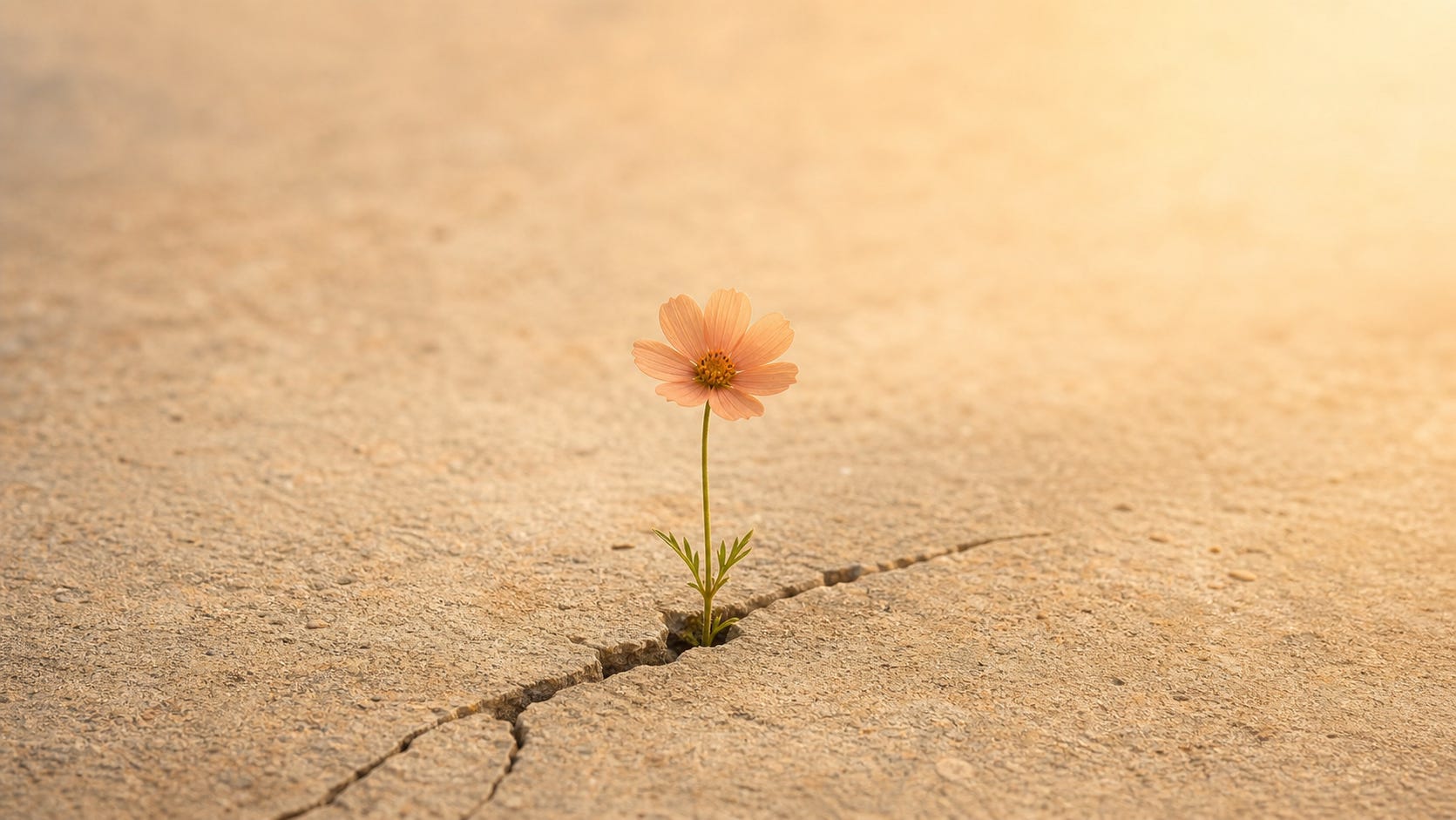
Here is what I know now that I didn’t know at twelve. The love was never missing. The awareness that told me something was wrong was the love. The friction I felt when I was hurting myself was the love. The resistance that made self-destruction feel like swimming upstream was the love. It was always there, underneath everything, waiting for me to stop overriding it.
Grace gave it room to breathe. Respect gave it room to grow. And forgiveness, repeated and imperfect and ongoing, cleared the debris that had been piled on top of it for as long as I could remember.
The love didn’t need to be built. It needed to be uncovered. I wrote about this in A Love Story — that love isn’t something we earn or arrive at. It’s the ground we’re already standing on. This is the same truth, turned inward.
If you are reading this and something in you resists the life you’re living, that resistance is not your enemy. It is not brokenness. It is not dysfunction. It is the part of you that has always known what you deserve. Grace is how you finally put yourself back —
Together.
Related Reading
A Love Story — The piece that started this thread. Love isn’t something we earn or arrive at. It’s the ground we’re already standing on.
The Self-Worth Epidemic — How a little dog named Frisky cracked my armor and showed me what unconditional worth looked like.
Resources
If anything in this piece resonated with you, these are places to start.
Find a Therapist Psychology Today Therapist Directory — Search by location, specialty, and insurance. This is where I found the therapist who changed my life.
Psychology Today: Attachment-Based Therapist Directory — Filter specifically for therapists trained in attachment-based modalities.
Understand Your Attachment Style What is Your Relationship Attachment Style? — Psychology Today overview of the four attachment styles and how they show up in adult relationships.
Psychology Today Relationship Attachment Test — A free self-assessment to help identify your attachment patterns.
Learn About Relational Psychotherapy Relational psychotherapy is a therapeutic modality rooted in attachment theory that uses the relationship between therapist and client as the primary tool for healing. It focuses on how early relational experiences shape our patterns and allows those patterns to be reworked through a safe, trusting therapeutic bond. If you experienced childhood abuse or trauma and struggle with how you relate to yourself and others, this modality may be worth exploring with a licensed therapist.
Books Attached: The New Science of Adult Attachment and How It Can Help You Find — and Keep — Love by Amir Levine and Rachel Heller — An accessible introduction to attachment theory and how it plays out in adult relationships.
Healing Your Attachment Wounds by Diane Poole Heller, PhD — Written by a trauma therapist with three decades of clinical experience, this book helps readers identify their own attachment patterns and begin shifting them from the inside.
The Body Keeps the Score by Bessel van der Kolk, MD — Explores how trauma lives in the body and offers pathways to healing, including therapeutic modalities that address both mind and body.
Crisis Support If you or someone you know is in crisis, the 988 Suicide and Crisis Lifeline is available 24/7. Call or text 988.
National Alliance for Eating Disorders Helpline: 1-866-662-1235